
BE AWARE, NOT SCARED
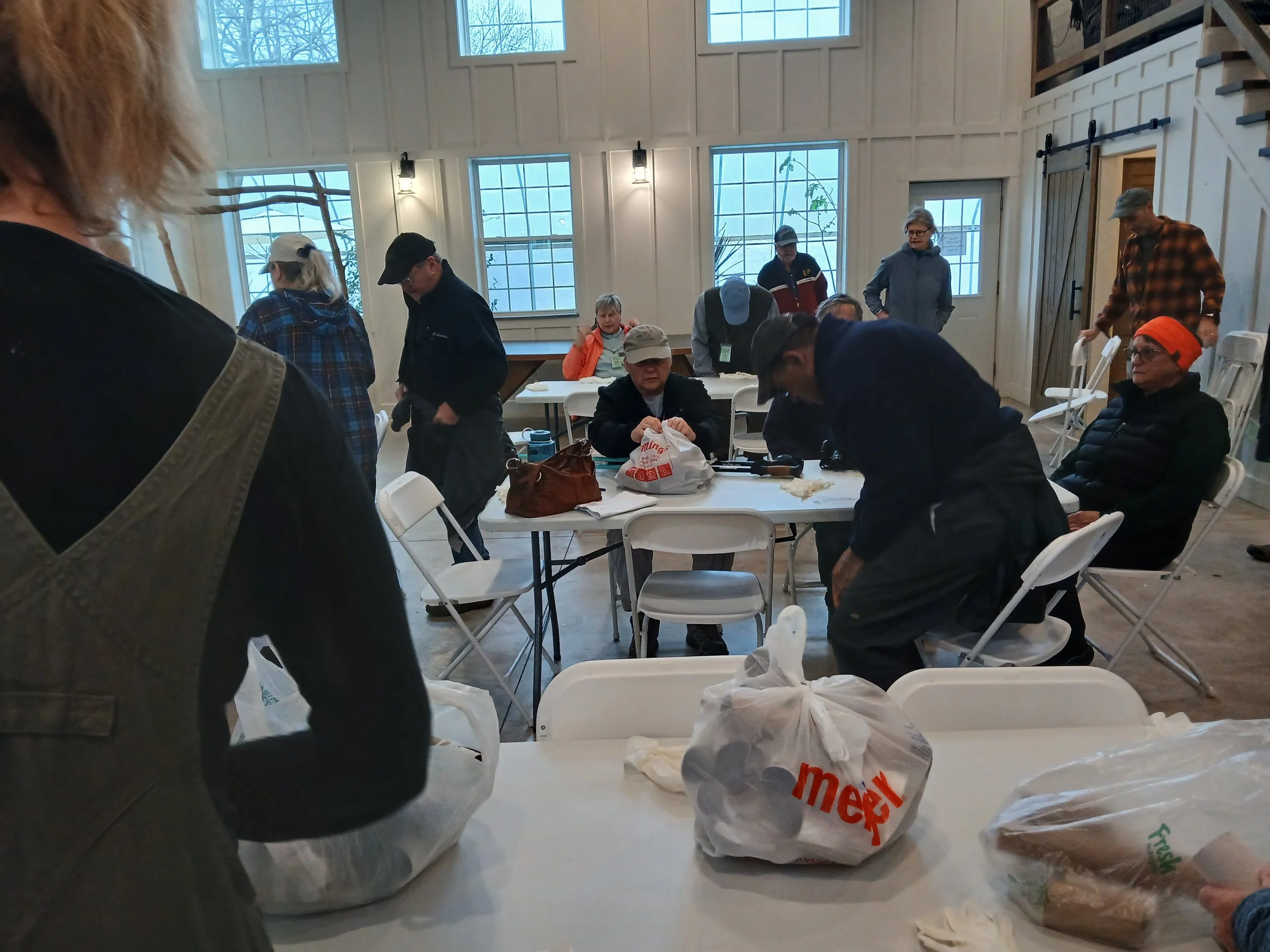
Pic by Member Miriam Bat-Ami
The Harbor Country’s meetup at the Goldberry Woods, a “modern family resort” adjacent to the Galien River in Union Pier, was short on walking and tall on learning. The former was impeded by excessive rains the night before March 7 (see Goldberry Woods website for amenities).
Gathered around Pat Fisher, HCH’s president, and Julie Haberichter, owner of Goldberry Woods, more than thirty of us listened to tick prevention strategies. “Be aware, not scared,” repeated our mentors. Then Julie elaborated on good tactics for hiking: wear light-colored clothing and a hat. After hiking: shake out hair, strip and search when you get home (always easiest if you have a mate). Ticks live for two years and are as small as a grain of salt in the nymph stage of their lives. A thorough check is advisable. Last year, we were informed, was the worst in quite a while. Given our harsh winter, 2026 might not be as bad, but ticks are not only carriers of Lyme disease but a host of other parasitic infections so the 24 safe hour period is not the best marker. Pat elaborated on how to use boot bands with socks and pants… Hook the band onto your leg, fold and tuck about an inch of pant cuff under band, then place banded cuff over the top of your boot (or sock). The goal is to prevent ticks from climbing inside your pants.
After this introduction, the group stopped at the large hen and quail enclosures. Not only does Haberichter provide fresh quail and hen eggs for her B&B guests, but she is involved in a quail release program. While looking to work with Andrews University, she also is creating a prairie on her 30-acre property. Quail need both a prairie and a forest. We passed vintage campers, cottages, and fruit trees that had been brought back to life by the present owner to enhance the organic farm experience. The trail skirted the abandoned banks of Lake Potawatomi with views of the Galien River, its floodplain, and tributary ravines (See Three Oaks Community Bulletin and FB entry). We looked down from the ravine to the swollen waters while the dogs amongst us sniffed and snorted. Pat explained how ravines are formed from glacial shrinkage and the terraces are created from proglacial lake levels. Today, the lowest of the terraces were river floodplains which covered the trails we intended to hike. Natural floodplains are an important ecosystem. They act as vital, multifunctional ecosystems that reduce flood risks by storing and slowing floodwaters, reducing peak flows, and controlling erosion. They also enhance water quality by filtering pollutants, recharge groundwater supplies, foster high biological productivity, and provide essential habitats for fish and wildlife. Pat added he intended to return once the water recedes and check for macroinvertebrates and vernal pool indicator species.
Inside a building adjacent to the Inn, we sat at tables and learned more about tick prevention. On each table were bags of toilet paper rolls and cotton balls wetted in insect repellent. Also, at each seat were gloves, and Haberichter had bottles of the pyrethrin repellent that one could take for a donation. A member of the group also suggested Insect Shield. Julie instructed us to lightly fill the tubes with five cotton balls. (Too tightly packed and mice would ignore them.) As we had seen on the trail, mice tear into the tubes for the cotton that lines their nests. In this way, any ticks on them—and mice are great hosts—are killed. Each of us made several tick destroying toilet paper rolls. I don’t know if Julie was a girl scout, but “Be prepared” defined her set-up. This amazingly industrious woman thought of everything, including the bags to place the rolls in.
A shout-out to Julie Haberichter and Pat Fisher for sharing their expertise on tick prevention.
Graciously Contributed by Miriam Bat-Ami