
Dunes at Tower Hill Camp
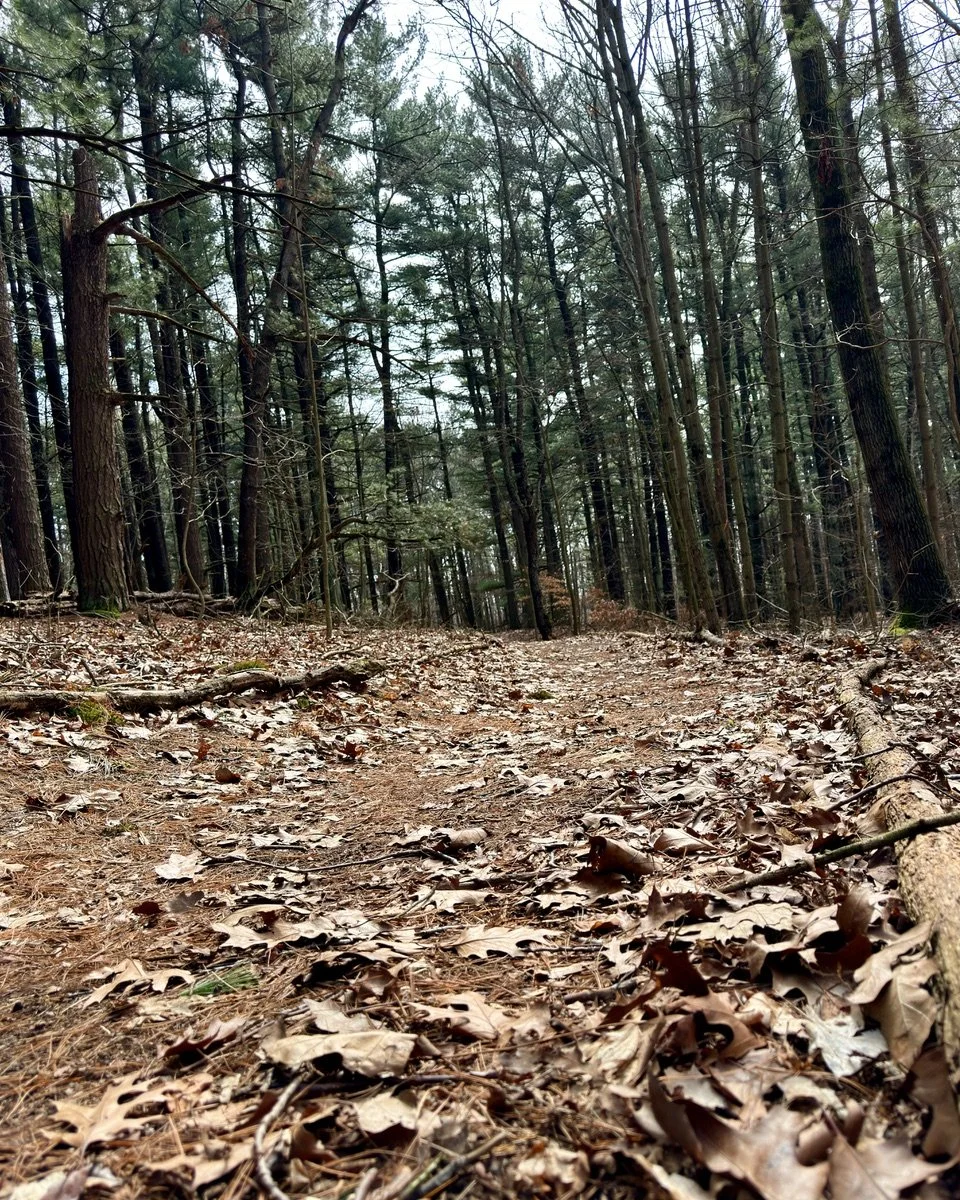
Pic by HCH Member Mark Piper
It was a rainy day, wet from several days of rain. We started on the porch of Wales Dining Hall where we discussed dunes. Hiking through backdunes and foredunes, we’d see east facing wooded dunes and the west facing bare dunes. We would also come upon some of the unique plants we have in Berrien County that are disjunct from their typical locations. Pat Fisher, our hike leader, introduced Tracy Heilman (camp director and co-hike leader), and she spoke briefly about Tower Hill Camp and answered the hikers' questions.
Along the way, we stopped and talked about the logging that occurred here and throughout Michigan and the replanting that took place including native and non-native trees. We stopped to talk about the American Holly evergreen trees, which we occasionally find in Berrien County but are native to the Appalachians. We spotted plenty of trout lilies that are up but not blooming yet and noticed several deer along the way. We also visited a crescent-shaped area in the backdune that is an excellent example of a parabolic dune. We found a smaller tree (4") with a larger tree top that had fallen off a nearby tree and hooked it (that was a mouthful, easier seen than described). We discussed how the trail parallel to Tower Hill Road was once part of the road, but the county swapped real estate to straighten the road. The original road went around the small dune that is still there. Pat noted the public accesses along Tower Hill Road as we exited.
Traveling between Tower Hill Woods and the beach trail, we passed a pine tree growing out of a hollow in a locust tree. Grafted by seed? As we made our way along Painterville Creek, Pat pointed out some of the largest sassafras trees. At the beach, several of the members noted that the creek entered the lake a long distance from where they remembered it. Because it was still sprinkling heavily and the wind was chilling, we didn't go up the beach, but we did discuss the foredunes, grasses, and large Warren Dunes that were visible. We talked again about the dune formation story, and Pat answered questions from the hikers.
On the way back, we found dutchman's breeches we hadn’t noticed before that were in bloom. When we got to First Street (the entrance to Tower Hill Camp), some of the hikers went back to their cars and others finished their hike through the forest. We stopped and talked about God's Mailbox which is a small area that has benches and a mailbox used by people to send letters to God. Tracy said it was used quite extensively during COVID. We hiked past a hill loaded with trout lilies and dutchman's breeches, none in bloom. The vernal pools were dried up earlier in the week. However, the rain filled them and we were watching the splashes of frogs. Pretty cool! One of the interpretive signs mentions witch hazel and Tracy asked when they bloom. Here is what Google says...
------
In Berrien County, native American Witch Hazel (Hamamelis virginiana) blooms in late fall, typically between mid-October and November, sometimes lasting into December. It is the last native woody plant to bloom, featuring crinkled, fragrant yellow petals that appear after the leaves have dropped.
------
We made our way back through the campgrounds and passed a cell tower under construction. There was an area with clay spoils from the hole dug for the tower, a large mass of grayish clay, left by the glacier.
Written by Pat Fisher, edited Miriam Bat-Ami.