
The Great Surprise: Trillium Woodlands and Ravine Preserves
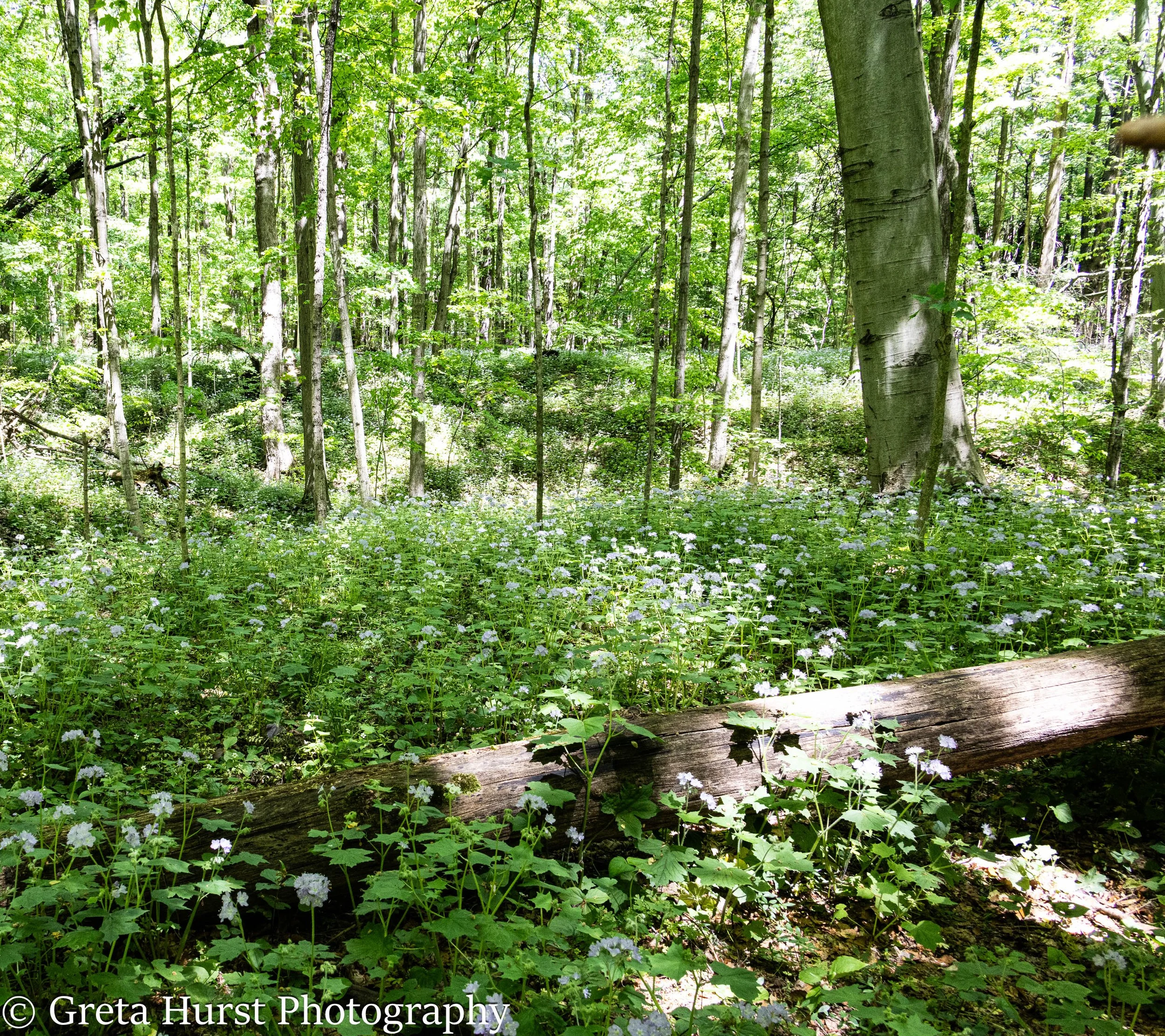
Pic by HCH Member Greta Hurst
A week or so before our hike at the Trillium Woodlands and Trillium Ravine Preserves (5/16), I was chatting with a friend about the upcoming trip. “We just went there yesterday,” she said. “They were in full bloom. I doubt there will be anything left when you go.” And then, she added, “They were exquisite. Try to go yourself soon.”
Having no time before the hike, I girded myself for disappointment. What a great surprise, so great that I mused on it afterwards. Sometimes, when we least expect to find what we are looking for, we are overjoyed, for what we have found, not at all what we sought, proves that much more wonderful.
And this is what happened. First our group, 20 strong, was introduced to Kate Gadacz, Chikaming Open Lands (COL) Volunteer along with Paul Freske and Nancy Nesyto-Freske, both Stewards of the COL Preserve. Nancy showed us the rain garden alongside the parking lot that was her capstone project for last fall's Conservation Stewards’ Certification extension course through MSU Extension. There is another this fall. I found this course immensely enjoyable with its knowledgeable instructors, enthusiastic participation and the mix of hiking, field days, and lectures (punctuated by good snacks). Nancy's rain garden is excellent to stop water runoff, promote soil retention and provide food for birds. The columbine, loved by hummingbirds, was in bloom.
We began our walk on the 40-acre property, COL land (the Uplands) and the 15-acre ravine leading down to the Saint Joseph River (the Trillium Ravine).
Early in our hike, we came upon the dryad saddle which looks like a huge mushroom saddle and is a tree protector. We followed the StoryWalk where kids can look at storybook images while they hike. The mayapple, a favorite of Eastern box turtles, had just finished blooming. The trillium hung limply against their leaves alongside the bedstraw. Tall, thin beech trees lined the trail. Pat explained the difference between Virginia creeper (5 leaves) and poison ivy (3 leaf) vines. Poison ivy, growing as a shrub or vine, has, as all horrible to people plants, one benefit. In the fall it produces a white berry that birds love. I still despise poison ivy.
Kate pointed out the different kinds of trillium and how they differ from each other. The Prairie trillium with its sepals underneath produces a cone-shaped red flower. It is taller than the Great White Trillium and has a mottled leaf. The Toad Shade Trillium has sepals on top. Like the trout lily and the mayapple and the spring beauty, the trillium takes several years before it flowers.
We marveled over time and the patience one must have to cultivate trillium. The great surprise came into view all around us as masses of purple. A giant purple carpet circling the trees, growing down the ravine. Yes, there was jewel weed, thus named because dew hangs like diamonds on the leaves. Yes, there was Jack-in-the-pulpit. A few were preaching. Insects go down the pulpit. The male escapes out the bottom. The female dies inside as she pollinates the plant. A gooseberry or two. But nothing was like the Great waterleaf. We had hit peak bloom time. We had hit the jackpot. Researching this purple majesty, I found you can eat the leaves and flower. The boiled leaves are like spinach.
Kate took us to another wonder, her private land near the river. On the river she has seen blue heron, the kingfisher, tree swallows, mute and trumpeter swans. The mute swan has an orange beak; the trumpeter, a black one.
What a surprisingly beautiful hike, as are all the hikes we take with HCH. Each one different; each one teaching us new things about trees, plants, flowers, animals–ourselves.
Blog by HCH Member Miriam Bat-Ami